


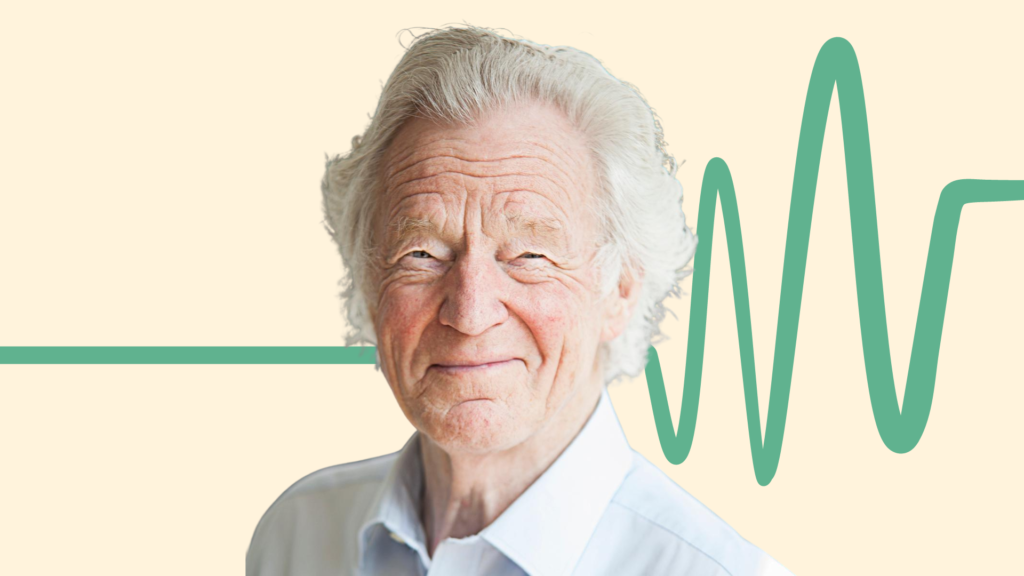
Introduction by Dr Jonathon Gray: One of the key goals of the Dragon’s Heart Institute is to develop transformational leaders of the future through exciting programmes of work such as Climb and international partnerships with world-leading thinkers. One of those people is my colleague and friend, Professor Sir Muir Gray. Sir Muir has worked for the National Health Service in England since 1972, occupying a variety of senior positions during that time, including serving as the Director of Research and Development for Anglia and Oxford Regional Health Authority, and first establishing and then being the Director of the UK National Screening Committee. He founded the National Library for Health, and was the Director of Clinical Knowledge, Process, and Safety for the NHS (England) National Programme for IT, serving as the Director of the National Knowledge Service. He was the first person to hold the post of Chief Knowledge Officer of the NHS (England), also serving as the co-Director of the Department of Health’s Quality Innovation Productivity and Prevention (QIPP) Right Care Programme. We are delighted that he is one of the principle teachers on our Climb programme. Read his first blog for the Dragon’s Heart Institute below.
We need a revolution in healthcare, not another reorganisation but another revolution. We have had revolutions before. We thought healthcare was safe, apart from the occasional disastrous case that went to court, until the publication of a report called An Organisation with a Memory which highlighted how frequently errors occurred.
So too with quality, we assumed that well-trained clinicians were giving good quality care until another report called Crossing the Quality Chasm revealed how variable the quality of care was and how little insight clinicians or their employing organisations had into the extent of the problem.
Now the need for a culture of safety and quality improvement is taken for granted and so too is the need for efficiency, producing good outcomes at minimal cost, but these revolutions are not sufficient to ensure the sustainability of universal healthcare, that is healthcare that is equitable and meets the needs of everyone irrespective of their ability to pay, and of course Wales can be proud of its part in the creation of universal, equitable healthcare due to the work of Aneurin Bevan and Julian Tudor Hart.
The challenge is that need and demand are increasing faster than resources. This happened before COVID-19 and will happen after the pandemic, which usefully highlighted the fact that there are more important resources than money, namely equipment and staff time.
However, even when COVID-19 is just another health problem the gap between need and demand will continue to grow, leading to calls to change the structure or the funding of healthcare but that will not address the problem and ensure sustainability because it does not address the key issue, which is not population ageing (the usual suspect).
Analysis by the Organisation for Economic Co-operation and Development demonstrates that the principal cause is what David Eddy called “the relentless increase in the volume and intensity of clinical practice” in his 1993 classic article in Journal of the American Medical Association. It is epitomised by increases in both testing and treatments, all evidence based and of high quality, delivered efficiently but at least 10% of the activity does not add value to the individuals treated or the populations which provided the financial resources.
The revolution that is needed is to focus on value with value-based healthcare the new paradigm; it is a cultural revolution with the culture of stewardship the revolutionary agent of change. Value relates outcomes to resources but it is essential to remember that resources mean much more than money. They also include time (of staff and alongside their carers) and such things as carbon.
Already, the Dragon’s Heart Institute has identified the need to make optimal vale of resources a priority from the procurement of those resources through to their recycling. Value is subjective, depending on perspective. Firstly there is the individual perspective determined by the degree to which the intervention improved not their disease but its impact on the problem that was bothering them most. Then there is the perspective of the health service. This is currently focused on the quality, safety and efficiency of the service provided for patients but as one of the gurus of leadership, John Kotter, pointed out there is nothing so useless as to do something more efficiently that should not be done at all.
In some cases, the intervention is provided to people who have the diagnosis but whose preferences have not been ascertained and who would have preferred some simpler treatment or no treatment at all. We are operating on the wrong patients, not the wrong identity but patients whose problems and preferences have not been ascertained. Furthermore, we know that for most conditions for which referral is based on equivocal criteria there is inequity; people from the least deprived sub groups of the population receive more care than people from the most deprived subgroups of the population.
Then there is the third dimension, the population dimension. Is the allocation of the population’s resources to the different segments of the population, to people with respiratory problems or to people with mental health problems for example, optimal? This is a value decision, allocative value. So too are decisions about how the health service that the population funds uses those resources. Do they, for example, give all their contracts to big companies or do they support local companies employing local people, what is called social value?
We need a cultural revolution from a culture in which it is believed that value is optimised by more carefully drafted contracts and more rigorously enforced regulations to a culture of stewardship in which everyone, both clinicians and managers, feel they are responsible for the use of resources, for optimising value, minimising waste and preventing inequity.
The Academy of Medical Royal Colleges has made the need for this clear in its 2014 report on Protecting Resources and Promoting Value, which states clearly that:
avoiding waste and promoting value are about the quality of care provided to patients – which is a doctor’s central concern. One doctors’ waste is another patient’s delay. Potentially, it could be that other patient’s lack of treatment. There is a clinical cost to wasted resources and also, as the report shows, a cost to the environment.
This is the culture of stewardship and the key issue distinguishing leadership from management is that leadership is responsible for culture and management works within that culture.
Our mission is to develop management and leadership and we need a new approach to management. We need well-managed institutions, but we also need systems for every segment of the population, each with a local network and a defined budget. Even more, we need leadership to develop the culture of stewardship and the transformation to value-based healthcare, the new paradigm to ensure the sustainability of universal healthcare.
For an opportunity to work with and learn from Sir Muir, apply to Climb today by visiting the Climb webpage.