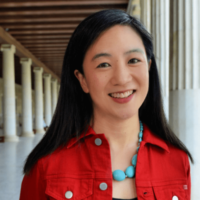


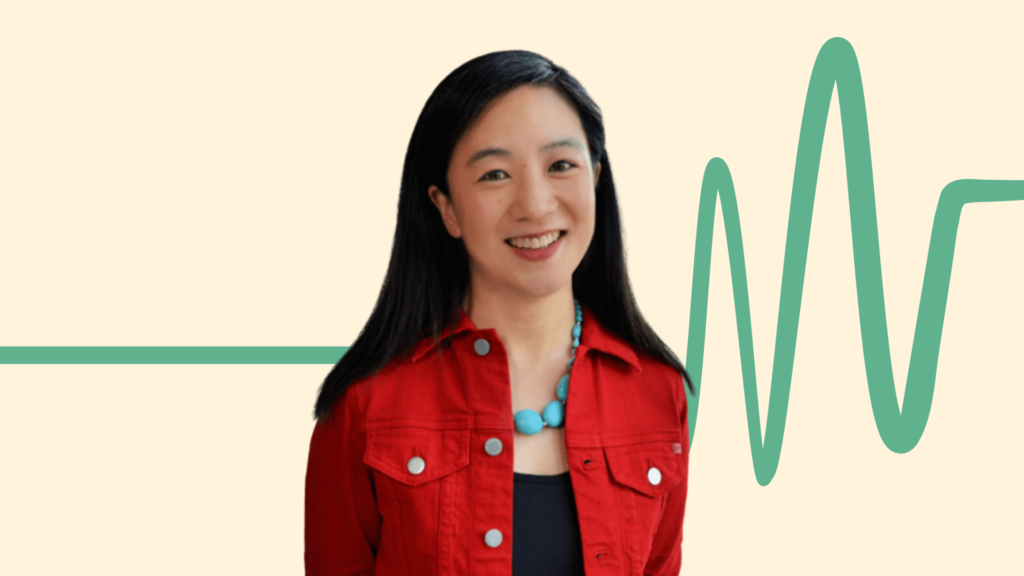
Introduction by Jonathon Gray: Where is the line between the possible and the plausible? And how do we as leaders cross it? In this piece, my colleague and friend, Hahrie Han, Director of the SNF Agora Institute and the P3 Lab at Johns Hopkins University discusses how equipping leaders with the tools and skills to organise their communities could allow us to to reimagine a different world, and then work to make it so. We were delighted that Hahrie came onboard to our Climb leadership programme and I think from this blog you will be able to see why. Her invaluable insight into social movements and community organisation, alongside her experience of working on the Obama presidential campaign make her a world-leader in this field. It is an honour and a privilege to be working alongside her to deliver Climb.
When the pandemic first began in the spring of 2020, the Social Science Research Council decided it wanted to create a “Time Capsule for Future Social Researchers,” a way for scholars from a range of disciplines to record the extraordinary historical moment. They asked each of us to identify a visual artifact of the pandemic, and then to participate in an interview about it.
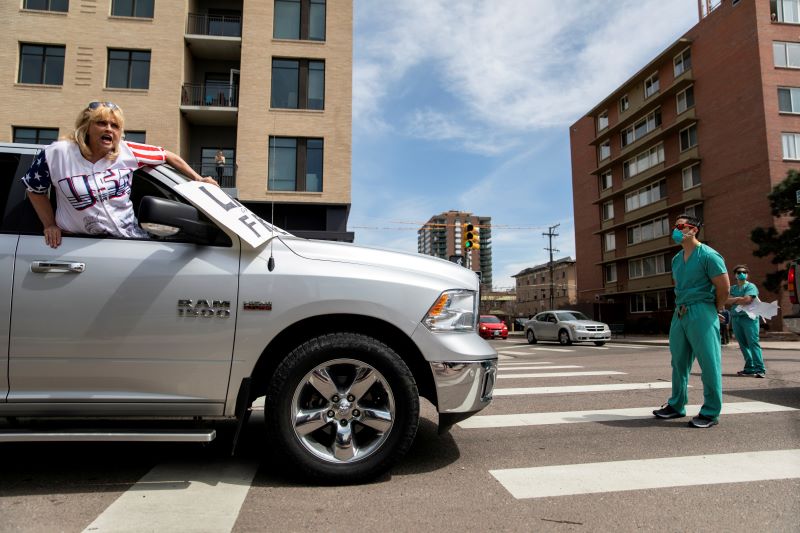
When I was invited to be part of this time capsule, I chose an image of a health care worker in the United States standing in the street in his scrubs calmly blocking an angry woman who was protesting the stay at home orders from being able to move her car. There were so many reasons that I chose that picture, but one was the way in which the image underscored the pandemic’s ability to show how desperately we all needed to find ways to work together to create the world we want.
Back in May 2020, I said, “The standoff between the two people in this picture encapsulates, for me, the desperate need we have to create a new kind of solidarity from the ground up, but also the inherent challenges we face in doing so.” The pandemic was like a giant stress test for our global society, expanding the fissures that had been emerging and, in some cases, sundering them apart. It reminded me of a letter that the author George Orwell wrote to his friend in 1940, when the second world war was ravaging society. He wrote, “The old life we’re used to is being sawn off at the roots.” It feels like we are in another moment like that, when the pandemic, the changing contours of the global economy, the political upheavals confronting so many countries, and all the social dislocation that accompanies these changes are challenging the work we do and the communities in which we live. The foundations of our world are being sawn off at the roots. The question is, what can we do to reimagine a different world, and then work to make it so?
As someone who studies social movements, community organizing, and people-powered politics as a strategy for social change, I always turn instinctively to the question of people when confronted with big questions like this. Who are my people, and what do they need? During the pandemic we saw so many people—from health care providers to public health workers to neighbors—stepping up to ask themselves that same question, “What do my people need?” Even when governments were failing us, it showed the enormous power of people’s unleashed compassion.
As we begin to reconsider the long-term challenges and opportunities that now confront us, the question is what can we do to instantiate the best of what we learned about ourselves during the pandemic, so as to overcome the hurdles that have been laid bare? I am convinced that the answer lies, at least in part, in figuring out how we can build on what we learned about what people can do when they act together, and begin to figure out how we create the kind of solidarity we need to build the interdependent society we want.
That—the work of building solidarity, creating structures to facilitate interdependence, teaching people to act together—is the work of organizing. Organizing is fundamentally about equipping a group of people to work together to make the change they want. All of us can see that there is a gap between the world as it is and the world as it should be. Organizing equips people to learn to work with each other to make the world as it should be a reality. It works by identifying leaders, creating community around those leaders, and then drawing power from that community to make change.
But learning to do that work is not easy. Sometimes people mistakenly assume that it’s just a matter of social capital—of creating more people who are more willing to reach out and build relationships with each other. Relationships are absolutely fundamental to organizing, and fundamental to organizing’s ability to play a part in addressing some of the public health crises we face. But, its durability, and its ability to affect change at a systemic level depends on so much more than social capital. It also depends on the kinds of structures or scaffolding we create around organizers, community members, and public health leaders willing to do the work. How do we begin to equip them to navigate an increasingly uncertain world, and create the collective capacities that make it more likely that leaders like them will continue to emerge?
I believe the only way in which we can achieve all of this is by working together, disregarding the barriers that would have stopped us from doing so in the past, even barriers such as international borders. We at the SNF Agora Institute are looking for like-minded people and organizations around the world, with critical eyes and hopeful hearts. That is why we’re absolutely thrilled to be working alongside the Dragon’s Heart Institute which was born out of the COVID-19 response in Wales, recognizing we cannot simply go back to the way things were. Instead, together we can collectively take a step forward into the future of healthcare, one in which health services a co-produced with the people who use them, and one in which we all have access to the levers of change.
I ended my interview about the time capsule with one of my favorite quotes: “Hope is belief in the plausibility of the possible as opposed to the necessity of the probable.” I believed that at the start of the pandemic and I still believe it now. I firmly believe that if we learn to work together, with intention, to bring public leaders into authentic relationship with the community, and create accountable structures to enable that relationship to grow, then we will be better able to solve the problems we have now, and in the future. All we have to do is believe and then act to make the possible more plausible.
For an opportunity to work with and learn from Hahrie Han, apply to Climb today by visiting the Climb webpage.